
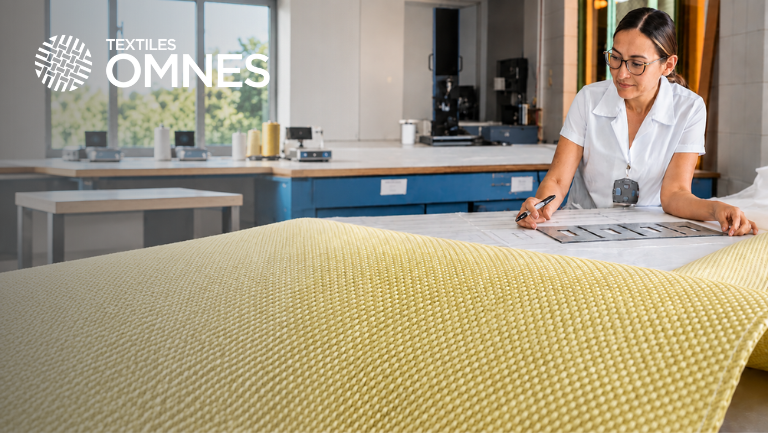
Behind the performance of a technical fabric, there is much more than a fiber or textile structure. Every measured and controlled property directly influences the quality, durability, and behavior of the material within an industrial application.
The properties of a technical fabric are the set of physical, mechanical, and structural characteristics that determine how a material will behave under real operating conditions. Their evaluation helps ensure that the fabric meets the performance requirements demanded by each industrial application.
Summary
Technical fabrics are used in sectors where material reliability is essential. Variables such as weight, density, thickness, strength, and dimensional stability make it possible to verify whether a fabric meets the required specifications. In this article, we explore the main properties of a technical fabric and why they are decisive for its performance in industrial applications.
Table of Contents
- • Why is it important to evaluate a technical fabric?
- • Physical properties of a technical fabric
- • Mechanical properties that determine performance
- • The importance of textile quality control
- • How these variables create value for the industry
In industrial textiles, quality is not defined only by the raw material used. The true performance of a technical fabric depends on the combination of design, construction, and control of its properties.
For this reason, measuring and evaluating specific variables is a fundamental practice to ensure that each fabric responds properly to the demands of its application.
Why Is It Important to Evaluate a Technical Fabric?
Technical fabrics are designed to fulfill specific functions within industrial processes, so they must maintain consistent and predictable behavior.
Evaluating their properties makes it possible to:
- • Verify compliance with technical specifications.
- • Ensure uniformity between production batches.
- • Optimize the performance of the final product.
- • Reduce the risk of premature failures.
- • Ensure the quality of the material delivered to the customer.
In industrial applications, small variations can generate significant differences in final performance.
Physical Properties of a Technical Fabric
Physical properties describe the construction and basic characteristics of the fabric.
Weight per Unit Area
Usually expressed in grams per square meter (g/m²), weight makes it possible to verify the amount of material present in the fabric and serves as an important reference for evaluating consistency and performance.
Fabric Density
Fabric density refers to the number of yarns present in the warp and weft within a given area. This property influences aspects such as:
• Structural stability.
• Fabric coverage.
• Mechanical behavior.
• Interaction with other materials.
Thickness
Thickness determines the vertical dimension of the fabric and can affect processes such as lamination, impregnation, or integration with industrial compounds.
Dimensional Stability
This property evaluates the fabric’s ability to maintain its dimensions when exposed to temperature, humidity, or tension during use.
Mechanical Properties that Determine Performance
In addition to its construction, a technical fabric must respond properly to the mechanical demands of the application.
Tensile Strength
This is one of the most important properties in industrial textiles. It measures the fabric’s ability to withstand loads before breaking, helping ensure safety and reliability in the final product.
Elongation
Elongation indicates how much the material can deform under a given load. This property is essential in applications where flexibility and stress absorption are critical factors.
Adhesion with Other Materials
In applications where the fabric works together with rubber, resins, or composites, adhesion capacity directly influences the performance and durability of the system.
Wear Resistance
Wear resistance evaluates how the fabric responds to friction and continuous use under demanding conditions.
The Importance of Textile Quality Control
The properties of a technical fabric must remain consistent over time and across different production batches.
For this reason, quality control is a fundamental tool to detect early deviations, ensure manufacturing uniformity, reduce waste, and improve product reliability.
In many cases, material consistency is just as important as its initial properties.
How These Variables Create Value for the Industry
The properties of a technical fabric are not simply laboratory data. Each one has a direct impact on the performance of the final product.
When these variables are properly designed and controlled, they can contribute to increasing product lifespan, improving operational efficiency, reducing maintenance costs, optimizing production processes, and minimizing failure risks.
Therefore, understanding the properties of a technical fabric is essential for developing reliable textile solutions adapted to the needs of each industry.
Conclusion
The properties of a technical fabric are the result of a combination of raw material, textile design, and quality control. Variables such as weight, density, thickness, strength, and dimensional stability help determine whether a fabric is prepared to meet the demands of an industrial application.
In industrial textiles, understanding and controlling these variables is the foundation for developing more efficient, consistent, and reliable materials.
Frequently Asked Questions (FAQs)
What properties are evaluated in a technical fabric?
The most common properties include weight, density, thickness, dimensional stability, tensile strength, elongation, and wear resistance.
Why is it important to measure the strength of a technical fabric?
Because it helps determine the material’s ability to withstand loads and stresses during use, ensuring safety and performance.
How does fabric density influence an industrial application?
Fabric density affects stability, strength, coverage, and the overall behavior of the fabric, directly influencing its final performance.
At Textiles Omnes, we develop and evaluate industrial textiles under strict quality criteria to ensure consistent materials adapted to the requirements of each application.
If you would like to learn more about our technical capabilities and textile solutions, our team will be ready to assist you.

